
What’s your growing zone?
Type a ZIP for your USDA zone, NOAA’s official frost dates and a planting calendar built from both.
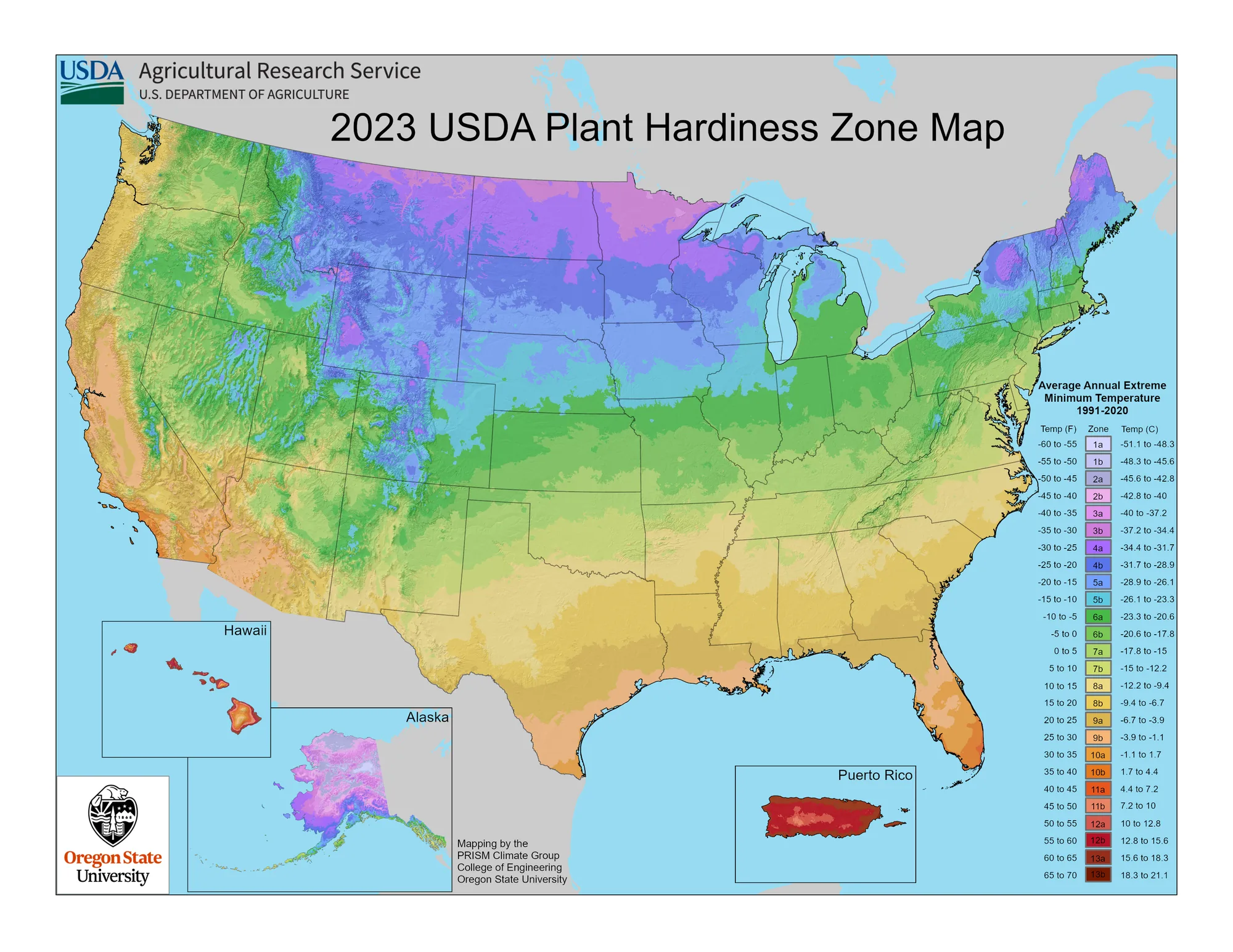
The 2023 USDA hardiness map
The official map, unaltered. Pick your state for a closer look, or open the interactive USDA map to zoom to your street.
Every zone, and who’s growing there
Each zone is the average coldest night of the year. The number under it is how many Yardcast gardeners have set that zone.
Zone or frost date?
Your zone answers “will it survive my winter?” Use it for perennials, shrubs, fruit trees and bulbs. A plant labeled “hardy to zone 6” should come back each year anywhere zone 6 or warmer.
Your frost dates answer “when do I plant?” Tomatoes, peppers, basil and squash die at 32°F, so they go out after your last spring frost. Lettuce, kale and onions handle cold and go in weeks before it.
Two towns in the same zone can have last frosts a month apart, which is why Yardcast plans your planting from your own frost dates, not your zone alone. Frost dates are medians, so a late frost is still possible about half the time. Yardcast’s frost alerts watch the forecast for you.
Questions
What is a USDA plant hardiness zone?
It’s a band on the USDA map based on the average coldest winter night of the year, measured over 1991–2020. Each zone is 10°F wide and split into a and b halves of 5°F. Zone 7a, for example, averages a coldest night between 0 and 5°F.
Is my zone the same as my frost date?
No. Your zone tells you which perennials, shrubs and trees can survive your winters. Your frost dates tell you when to plant tender annuals like tomatoes and basil. Two places in the same zone can have last frosts weeks apart, so Yardcast uses both.
Where do Yardcast’s frost dates come from?
From NOAA’s official 1991–2020 U.S. Climate Normals, using the weather station nearest you. The last frost date is when there’s a 50% chance of a later spring frost (32°F), and the first frost date is when there’s a 50% chance of an earlier fall frost. Wait a week or two past the last frost for tomatoes and peppers.
Did my zone change in 2023?
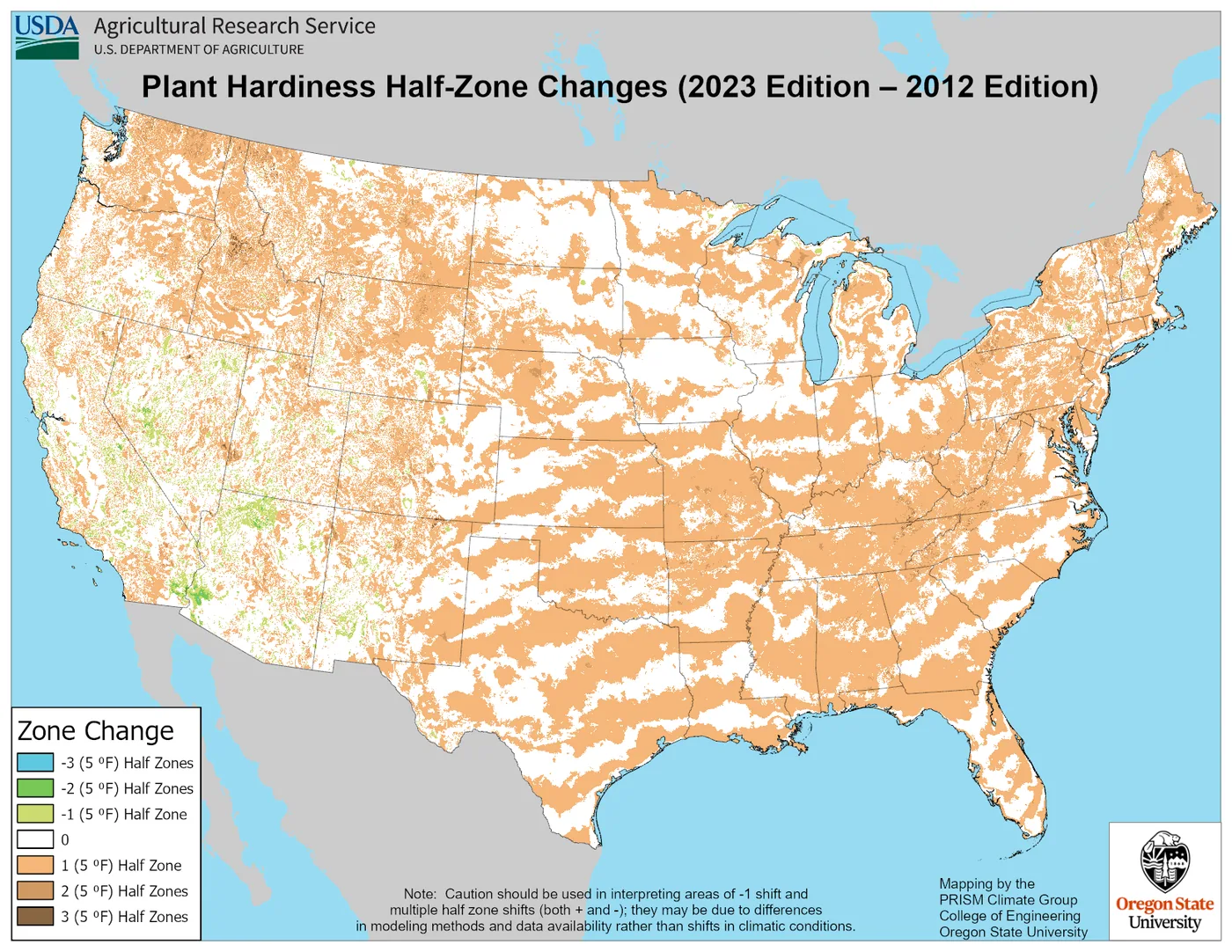
Possibly. The 2023 USDA map uses newer, more detailed data than the 2012 map, and about half of the country moved into the next warmer half-zone. The change map below shows where.
ZIP zones come from the PRISM Climate Group data behind the USDA map, via phzmapi.org. Frost dates are NOAA’s 1991–2020 U.S. Climate Normals from the nearest weather station. Neither USDA nor NOAA endorses Yardcast. Planting windows are general guidance for the starter crops in the app; check seed packets and your county extension office for local advice.