
Watering in Florida sand: deep, early, and less often
Sandy soil drains fast and holds little water, which leads most people to water often and shallow. Roots do better with the opposite.
The short version
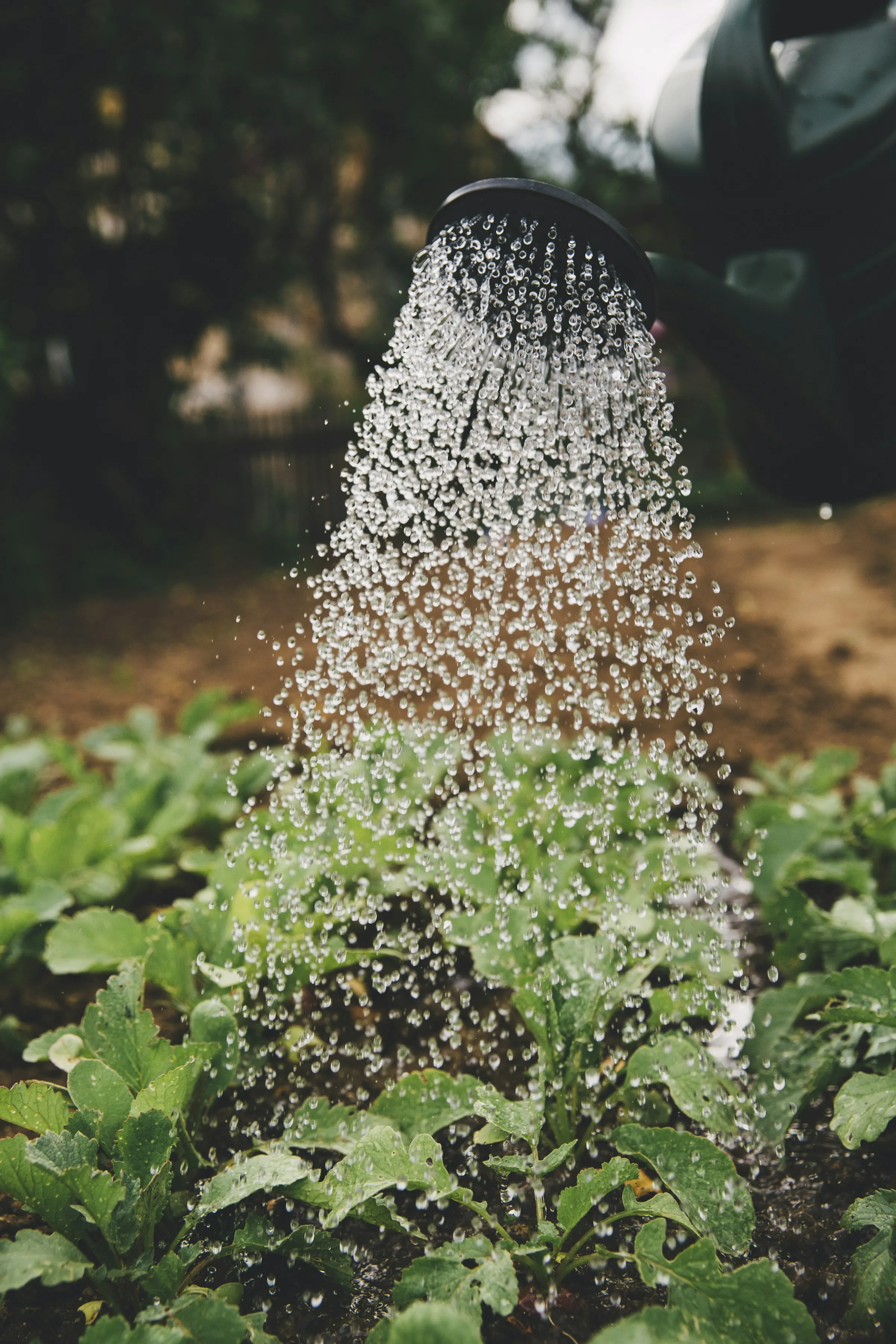
- Water early in the morning so leaves dry quickly and less water is lost to evaporation.
- Push a finger two inches into the soil first. If it's still moist, skip watering.
- Two to three inches of mulch and drip irrigation keep sandy beds evenly moist with less water.
Most Florida soils are sand with very little organic matter. Water moves straight through, so a quick daily sprinkle wets the top inch and runs past everything else. Plants end up with shallow roots that wilt the moment you skip a day.
A better routine
- Water deeply when the top two inches are dry, then let the bed dry somewhat before the next round.
- Water in early morning. Evening watering leaves foliage wet overnight and invites fungal disease.
- Make a slight basin around each transplant so water soaks in instead of running off.
- Mulch 2–3 inches deep with pine straw, leaves or wood chips, kept a few inches off stems.
- Use drip line or soaker hose in beds. It puts water at the roots and keeps leaves dry.
Containers are different
Pots dry out much faster than beds, especially black plastic in full sun. In summer, many containers need water every day, and small pots may need it twice. Group them together and move them out of afternoon sun during heat waves.
Yardcast's Today tab combines rain and evapotranspiration in your forecast to tell you when to skip watering your beds, and still reminds you about containers.
Check your county's watering-day restrictions before setting up a timer. Most Florida water management districts limit the days you can run sprinklers, though hand watering and drip irrigation of vegetable gardens are often exempt.
Sources
Efficient Irrigation for Florida-Friendly Edible Landscapes (UF/IFAS EDIS EP617)Florida Vegetable Gardening Guide (UF/IFAS EDIS VH021)Updated November 18, 2026. General guidance; check your county extension office for local specifics.
Comments
Loading comments…